
Environmental pollution is a serious problem that affects our planet, health, and future generations. Pollution happens when harmful substances are released into the air, water, or land, making them unsafe for humans, animals, and plants. It can be caused by factories, vehicles, waste, chemicals, and even noise. Learning about pollution helps us understand its dangers and how to prevent it. In this blog, we will share 10 lines on Environmental Pollution, a short essay of 200 words, a detailed essay of 850 words, and useful tips to protect our environment.
10 Lines On Environmental Pollution In English
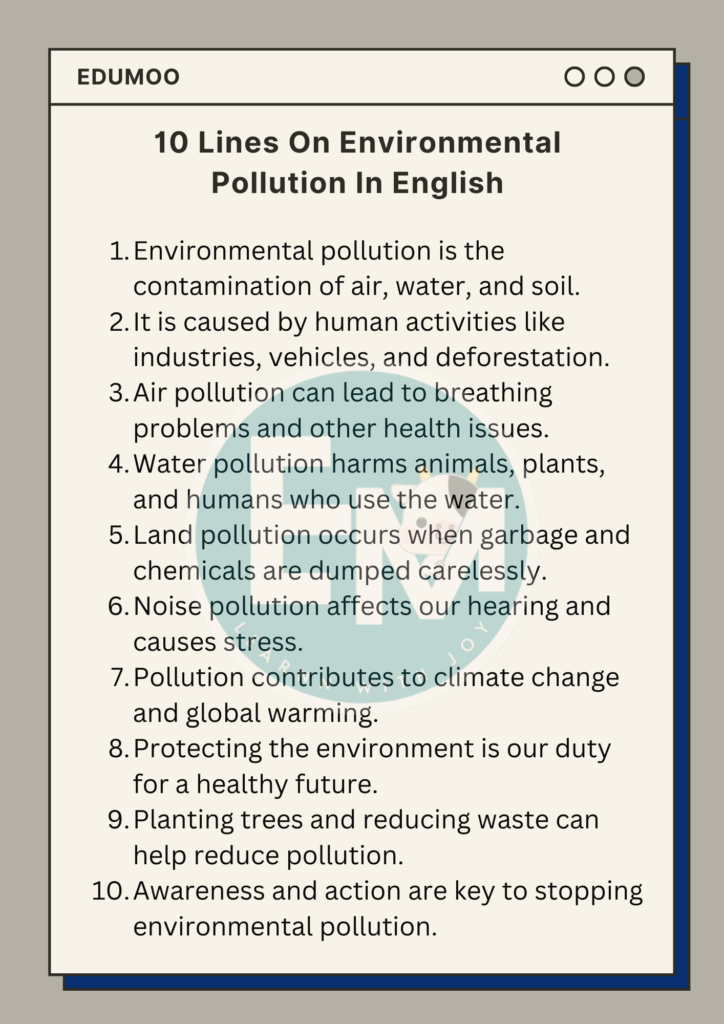
- Environmental pollution is the contamination of air, water, and soil.
- It is caused by human activities like industries, vehicles, and deforestation.
- Air pollution can lead to breathing problems and other health issues.
- Water pollution harms animals, plants, and humans who use the water.
- Land pollution occurs when garbage and chemicals are dumped carelessly.
- Noise pollution affects our hearing and causes stress.
- Pollution contributes to climate change and global warming.
- Protecting the environment is our duty for a healthy future.
- Planting trees and reducing waste can help reduce pollution.
- Awareness and action are key to stopping environmental pollution.
Essay On Environmental Pollution In English In 200 Words
Environmental pollution is one of the biggest problems faced by the world today. It occurs when harmful substances such as chemicals, smoke, and garbage enter the environment, making it unsafe for living beings. Pollution affects air, water, and land, and can also include noise and light pollution.
Air pollution comes from vehicles, factories, burning fossil fuels, and smoke. It causes breathing problems, asthma, and other health issues. Water pollution happens when rivers, lakes, and oceans are contaminated with waste, chemicals, or oil. This affects fish, animals, and humans who depend on water. Land pollution is caused by improper disposal of garbage, chemicals, and plastic, which can destroy soil quality and harm plants and animals. Noise pollution from traffic, machines, and loudspeakers can lead to stress and hearing problems.
Environmental pollution also impacts the climate. It contributes to global warming, melting ice, and changing weather patterns. Human activities are the main reason for pollution, but everyone can help reduce it. Planting trees, using less plastic, avoiding littering, and using clean energy are some simple steps to fight pollution. Education and awareness are also very important.
If we all work together to protect the environment, we can ensure clean air, water, and land for ourselves and future generations. Everyone’s effort matters in keeping the Earth healthy and pollution-free.
Essay On Environmental Pollution In English In 850 Words
Environmental pollution is one of the biggest problems that the world faces today. It occurs when harmful substances are introduced into the natural environment, causing damage to air, water, and land. Pollution is mainly caused by human activities such as industrialization, urbanization, deforestation, and the excessive use of vehicles. It has become a global issue because it affects not only the health of humans and animals but also the balance of ecosystems and the climate of the Earth. Understanding the causes, types, effects, and solutions of environmental pollution is essential to protect our planet.
Air pollution is one of the most common forms of environmental pollution. It occurs when harmful gases, smoke, and dust are released into the atmosphere. Major sources of air pollution include vehicle emissions, factory smoke, burning fossil fuels, and forest fires. Polluted air can lead to serious health problems, including asthma, bronchitis, lung diseases, and even heart problems. Air pollution also contributes to global warming and climate change because harmful gases like carbon dioxide and methane trap heat in the atmosphere. Smog and acid rain are other consequences of air pollution, which can harm plants, animals, and human health.
Water pollution is another dangerous form of pollution. It happens when rivers, lakes, oceans, and other water bodies become contaminated by chemicals, sewage, oil, and plastics. Polluted water affects aquatic life, making it difficult for fish and other animals to survive. Humans also suffer when they use contaminated water for drinking, cooking, or bathing, which can lead to serious diseases like cholera, typhoid, and dysentery. Industrial waste, pesticides, and fertilizers from farms are common causes of water pollution. Oil spills in oceans can destroy marine ecosystems and harm thousands of aquatic animals.
Land pollution occurs when harmful substances are dumped on the soil, making it unfit for agriculture and harmful for living beings. Plastic waste, chemical spills, mining, and deforestation are major contributors to land pollution. Land pollution destroys fertile soil, reduces crop production, and harms animals that live on land. Improper disposal of garbage in landfills also releases harmful chemicals into the soil and water, creating further problems. This type of pollution is often overlooked but has long-term effects on the environment.
Noise pollution is another form of pollution that affects both humans and animals. It is caused by loud traffic, industrial machines, construction work, and loudspeakers. Constant exposure to noise can lead to stress, anxiety, hearing problems, and difficulty in concentrating. Urban areas with high traffic and industrial activity face severe noise pollution, which can disturb the natural balance of life and affect mental health.
Light pollution, although less talked about, is also a problem in modern cities. Excessive artificial light from streetlights, buildings, and advertisements affects both humans and wildlife. It disrupts natural rhythms, confuses animals, and even makes it difficult for people to observe stars in the sky. Reducing unnecessary lighting can help decrease light pollution and protect ecosystems.
The causes of environmental pollution are mainly human activities. Rapid industrialization, overpopulation, urbanization, and deforestation are major contributors. Factories release harmful gases and chemicals, vehicles emit smoke, and agriculture uses pesticides and fertilizers that harm the soil and water. Littering, improper waste disposal, and the use of non-biodegradable materials like plastics further increase pollution. While pollution has natural causes too, such as volcanic eruptions and dust storms, human activities are the main reason behind the current environmental crisis.
The effects of pollution are severe and far-reaching. Health problems, such as respiratory diseases, heart problems, allergies, and infections, are common among people living in polluted areas. Pollution also affects animals and plants by destroying their habitats and reducing biodiversity. Water pollution contaminates aquatic life, while air pollution damages forests and crops. Pollution is also a major contributor to climate change, causing global warming, rising sea levels, melting ice, and extreme weather events like floods, hurricanes, and droughts. If pollution continues unchecked, it could make large areas of the planet uninhabitable in the future.
Fortunately, pollution can be reduced through proper measures. Planting trees and increasing green cover can improve air quality and reduce carbon dioxide. Using renewable energy sources, such as solar and wind energy, helps decrease the use of fossil fuels. Proper waste management, recycling, and reducing the use of plastics can prevent land and water pollution. People can also reduce pollution by using public transport, carpooling, or cycling instead of private vehicles. Education and awareness campaigns play a significant role in teaching people about the importance of protecting the environment.
Governments, communities, and individuals all have a responsibility to reduce pollution. Strict environmental laws, pollution control technologies, and awareness programs are essential to tackle this problem. International cooperation is also important because pollution in one country can affect the entire planet. Simple actions, when practiced collectively, can make a big difference in preserving our environment.
In conclusion, environmental pollution is a major threat to life on Earth. It affects air, water, land, and even noise and light conditions. The causes are mainly human activities, and the effects are dangerous for health, nature, and the climate. However, pollution can be controlled with collective efforts, proper planning, and awareness. Protecting the environment is the responsibility of every individual. By taking action today, we can ensure a cleaner, healthier, and safer planet for ourselves and future generations.
Also Read: 10 Lines on Air Pollution In English
Conclusion
Today, we have learnt 10 lines on Environmental Pollution. Environmental pollution is a major problem that affects our health, wildlife, and climate. By understanding its causes and effects, we can take steps to reduce it. Small actions like planting trees, reducing waste, and using clean energy can make a big difference. Awareness and cooperation are key to creating a pollution-free world. Together, we can protect our planet for ourselves and future generations.