
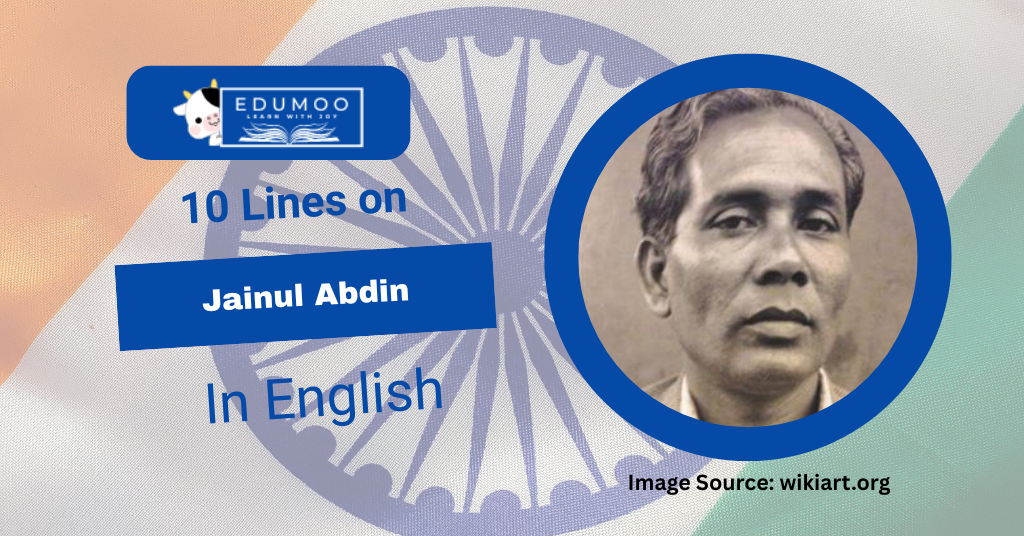
Zainul Abedin (often written as Jainul Abdin) was a famous artist from the Indian subcontinent. He is known for his beautiful paintings and deep love for art. His work showed the real life of people, especially during difficult times. In this blog, you will read 10 simple lines and essays about his life and achievements in very easy language.
10 Lines On Jainul Abdin In English
- Jainul Abdin was a great artist.
- He was born on 29 December 1914.
- His birthplace was Kishoreganj.
- He loved drawing from a young age.
- He studied art in Kolkata.
- He became famous for his famine paintings.
- His drawings showed the pain of poor people.
- He is called the pioneer of modern art in Bangladesh.
- He founded an art institute in Dhaka.
- He died on 28 May 1976.
Essay On Jainul Abdin In English In 200 Words
Zainul Abedin, also known as Jainul Abdin, was a famous artist and painter. He was born on 29 December 1914 in Kishoreganj, which is now in Bangladesh. From his childhood, he was very interested in drawing and painting. He loved to draw nature and people around him.
He completed his education in art from the Government Art School in Kolkata. His talent and hard work made him one of the best artists of his time. He became very famous during the Bengal Famine of 1943. During this time, he made many sketches that showed the suffering of poor people. These paintings touched the hearts of many people.
Zainul Abedin is known as the father of modern art in Bangladesh. He played a very important role in developing art in the country. He also established the Institute of Arts in Dhaka, which helped many young artists to learn and grow.
He received many awards for his great work. His paintings are still admired by people all over the world. He died on 28 May 1976, but his work still inspires many artists.
Zainul Abedin will always be remembered as a great artist who showed the real life of people through his art.
Essay On Jainul Abdin In English In 550 Words
Zainul Abedin, popularly written as Jainul Abdin, was one of the greatest artists of the Indian subcontinent. He is widely respected as the pioneer of modern art in Bangladesh. His life was full of creativity, hard work, and dedication to art. His paintings not only showed beauty but also told powerful stories about human life.
Zainul Abedin was born on 29 December 1914 in Kishoreganj, a small town in present-day Bangladesh. His father was a police officer, and his family supported his interest in art. From a very young age, he loved to draw pictures of rivers, villages, farmers, and daily life scenes. He often visited the banks of the Brahmaputra River to observe nature and sketch what he saw.
His passion for art led him to Kolkata, where he joined the Government School of Art. He worked very hard and became one of the top students. His teachers were impressed by his talent and dedication. After completing his studies, he started working as an artist and later became a teacher.
The most important phase of his life came during the Bengal Famine of 1943. This was a tragic time when millions of people suffered from hunger and poverty. Zainul Abedin created a series of sketches using simple materials like ink and paper. These drawings showed starving people, mothers with weak children, and the harsh reality of life during the famine. His artwork was powerful and emotional, and it made people aware of the suffering of others.
These famine sketches made him famous across the world. People appreciated his honesty and courage in showing the truth through his art. He did not focus only on beauty but also on reality. This made his work unique and meaningful.
After the partition of India in 1947, he moved to East Pakistan, which is now Bangladesh. There, he continued his work and played an important role in promoting art and culture. In 1948, he established the Government Institute of Arts in Dhaka. This institute later became one of the most important art schools in the country. Many young artists received training there and became successful.
Zainul Abedin’s style of painting was simple yet powerful. He used lines and expressions to show emotions. His works included paintings of rural life, festivals, and struggles of common people. He believed that art should connect with people and reflect their lives.
He received many awards and honors for his contribution to art. He was respected not only in Bangladesh but also in many other countries. His paintings are displayed in museums and galleries, and they continue to inspire new generations of artists.
Zainul Abedin passed away on 28 May 1976. Even after his death, his legacy lives on. He is remembered as a great artist who used his talent to show truth and humanity. His work teaches us that art is not just about beauty but also about expressing feelings and telling stories.
In conclusion, Zainul Abedin was a remarkable artist whose contributions to art and society are unforgettable. His life is an inspiration for students and artists. He showed that with passion and dedication, one can achieve great success and make a difference in the world.
Also Read: 10 Lines On Houseboat In English
Conclusion
Today, we have learnt 10 lines on Jainul Abdin. Zainul Abedin was not just an artist but a storyteller who used paintings to express real-life emotions. His work still inspires students and artists today. Learning about his life helps us understand the importance of art and creativity.